
April 2026
AAMVA’s five committees held their combined meeting in Arlington, Virginia on April 8-9 in AAMVA’s new headquarters office. The committees reported on their progress and deliverables in a combined portion and in their individual breakouts discussed future projects and initiatives.
Driver Committee
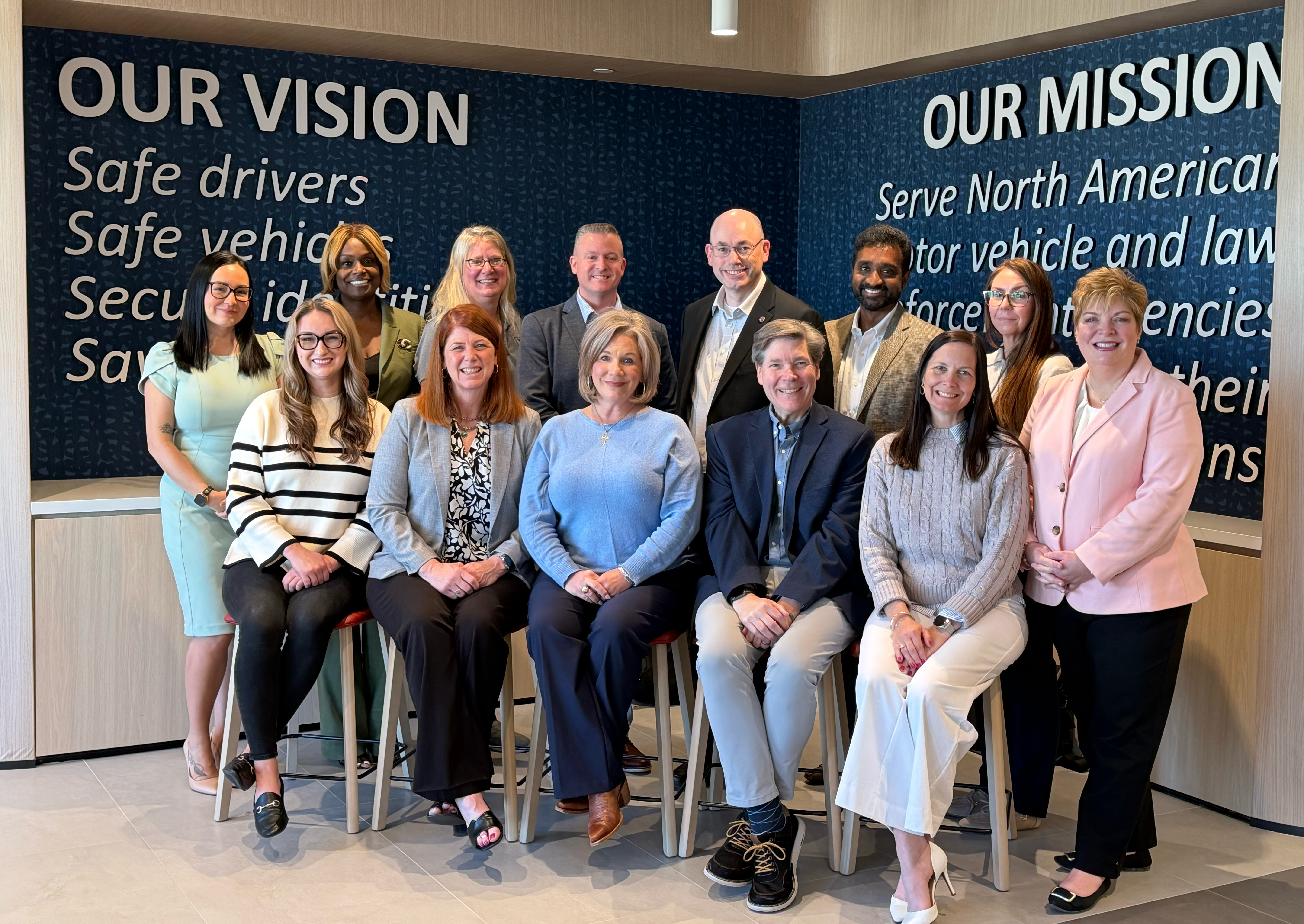
The Driver Committee has had a productive year advancing its mission of safer drivers, more secure data, and ultimately saving lives through oversight of driver programs and verification services. Across its six subcommittees, one reporting team, and one working group significant progress has been made on a range of initiatives. Joint meetings between the Commercial Skills Test Information System (CSTIMS) Subcommittee and the Driver Testing and Examiner Training (DTET) Subcommittee have fostered greater collaboration and cost savings, while CSTIMS has shifted its focus toward non-CDL driver training and testing now that the modernized CDL test is widely implemented. The State-to-State Verification (S2S) Service welcomed Oklahoma for both S2S and Driver History Record (DHR) services, with New Jersey also going live on DHR, and three additional jurisdictions are anticipated to join in 2026, with efforts underway to extend access to territories as well. The Commercial Driver’s License Information System (CDLIS) continues to be enhanced through the Drug and Alcohol Clearinghouse (DACH) and the Medical Examiner Certification Integration Final Rule (NRII), the National Driver Register (NDR) Subcommittee is advancing several initiatives, and the AAMVA Code Dictionary (ACD) Subcommittee recently collaborated with the CDLIS group on topics including intelligent speed assistance (ISA) restriction codes — an area generating considerable interest. Rounding out the year's efforts, the ISA Working Group has developed model legislation now available to all jurisdictions and is turning its attention to best practices for ISA policies and procedures.
At their individual breakout meeting, the Driver Committee, chaired by Mimzie Dennis, Assistant Chief of the Driver License Division for the Texas Department of Public Safety included opening remarks and a driver organizational update, all led by committee leadership. The bulk of the agenda was devoted to progress reports from their seven subcommittees followed by a government affairs update and driver policy statement review. The meeting also covered the 2026 Federal Motor Carrier Safety Annual Program Review and the Military-Civilian Health Ecosystem, grants and funding opportunities, and a broader driver roadmap review and discussion. Additional topics included an ISA Working Group update, subcommittee vacancies and jurisdictional representation, S2S priorities, identity management collaboration, and non-domiciled and English language proficiency efforts. The meeting closed out with a review of FY27 budget new asks, future conference planning, and wrap-up remarks from committee leadership.
Law Enforcement Committee
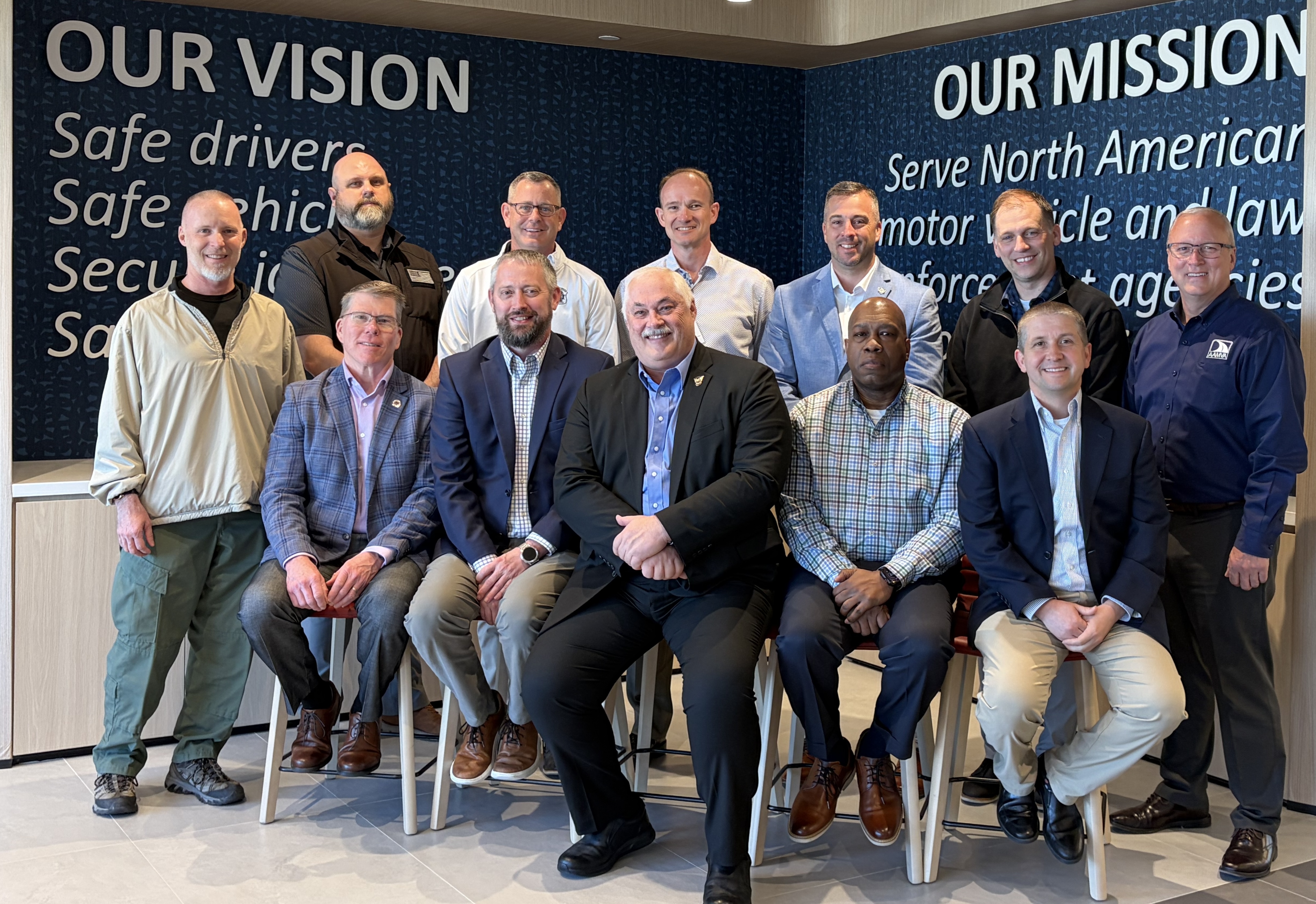 2026 Law Enforcement Committee
The Law Enforcement Committee has had a highly productive year, advancing its mission of oversight, governance, and collaboration with motor vehicle administrators to improve roadway and public safety. A joint subgroup with the Identity Management Committee is developing a toolkit to help law enforcement interact with mobile driver's licenses (mDLs), covering interaction procedures, technology procurement, and implementation strategies, with release expected later this year. In anticipation of the FIFA World Cup and Olympics bringing international visitors to North America, the Committee hosted a webinar on handling traffic violations and incidents involving non-U.S. drivers, available on the AAMVA website. On the policy front, the Committee is working to update guidance on potentially misleading vehicle automation advertising and is developing two new policies — one clarifying that vehicle identification numbers are not personally identifiable information, and another ensuring motor vehicle data remains accessible to law enforcement for crash and criminal investigations — with Board of Directors review targeted for later this summer. Resource development was also a major focus: the second edition of the License Plate Reader (LPR) Program Best Practices Guide was published in August, incorporating new content on the benefits and challenges of LPR programs and the use of artificial intelligence. The newly formed Fraud Subcommittee held its first in-person meeting and is examining trends such as manufacturer statement of origin fraud and VIN inspections, while the Fraud Detection and Remediation (FDR) Training Program has been expanded with annual content updates, a French-language version, and a new law enforcement video format. Finally, the NMVTIS Law Enforcement Subcommittee, working alongside the Vehicle Committee, developed model legislation for reporting junk, salvage, and insurance total loss vehicles to help jurisdictions establish or strengthen related regulatory authority.
At their individual breakout, the Law Enforcement Committee discussed updates on the status of policy positions and government affairs, followed by a briefing on English language proficiency and commercial motor vehicle out-of-service orders. The Committee met jointly with the Identity Management Committee to review current documents, discuss next steps, and address other considerations related to their ongoing collaboration and met jointly with the MVA Operations and Customer Service Committee on a draft Employee Safety and Security Best Practices document, including how to align it with law enforcement interests and effectively disseminate it once published. Rounding out the agenda, specific topics included criteria for possible new award, an update on the FDR program, feedback on the recent webinar addressing interactions with non-U.S. drivers and traffic violations, and a discussion of a future webinar on Montana State Patrol's use of the mDL at roadside.
Identity Management Committee
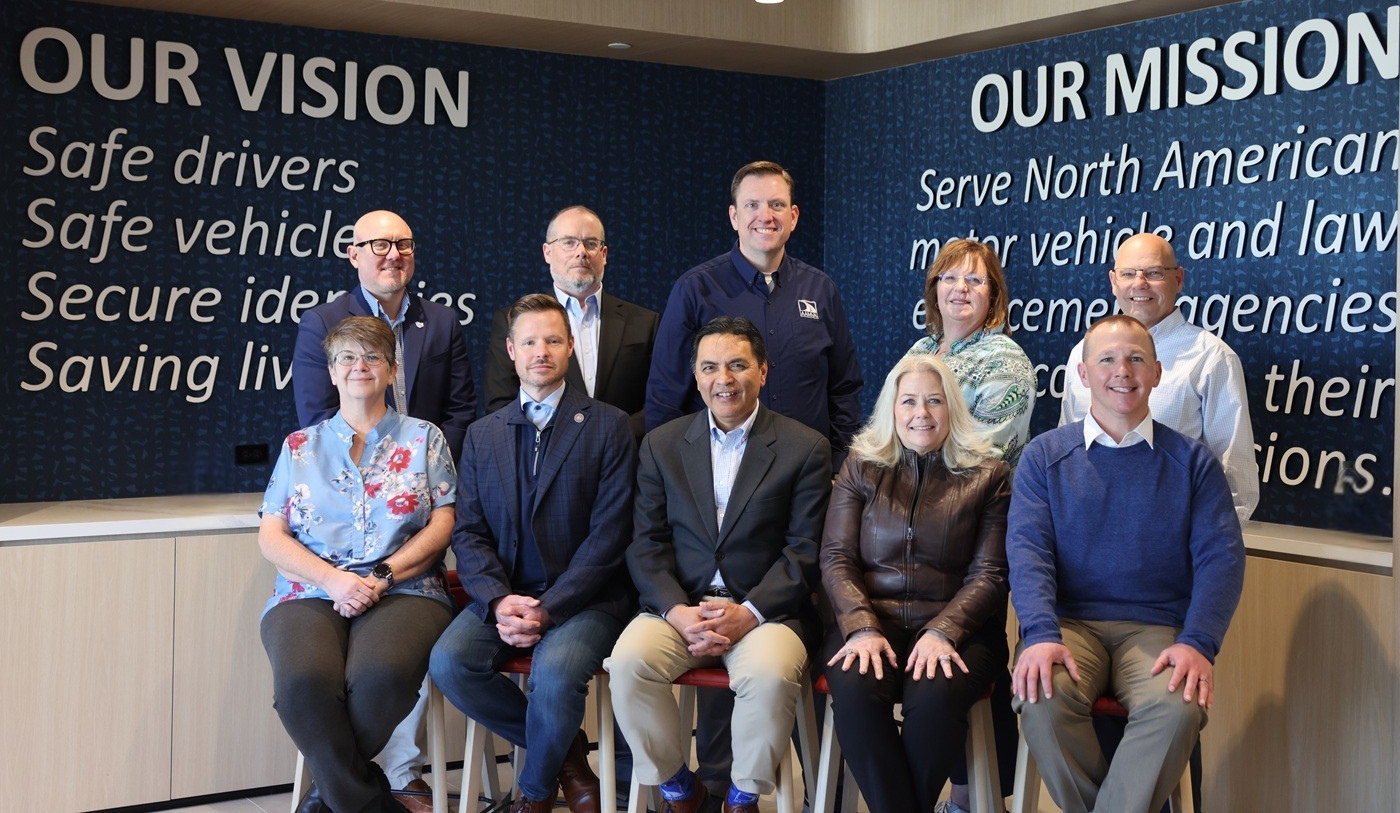 2026 Identity Management CommitteeThe Identity Management Committee is focused on its core mission of establishing and preserving identity integrity as a public good through standards, technical solutions, best practices, and guidelines. Recent highlights include approving five new Digital Trust Service (DTS) applications — four of which are now live in Alaska, Montana, North Dakota, and Illinois — along with work on future DTS enhancements and the approval of a new policy requiring in-person photo capture with agency-controlled equipment for initial driver's license or ID issuance, which will go to a membership vote at the Annual Membership Meeting in September. On the subcommittee front, the formerly combined Joint mDL Subcommittee has been split back into two focused bodies: the Card Design Standard Subcommittee, which published an updated DL/ID Card Design Standard last June emphasizing data transparency between barcode and visible card data and is now modernizing secure card design principals; and the Digital Identity Subcommittee, which oversees the AAMVA mDL Implementation Guidelines — most recently updated in May 2025 to change the server retrieval method from optional to prohibited — and is currently updating procurement guidance and model legislation documents. Rounding out the committee's work, the Facial Recognition Working Group has been reconvened to update the Facial Recognition Program Best Practices Guide, last published in 2019, with a new version expected before year's end.
At their individual breakout, the Identity Management Committee discussed policy matters, including a review of the photo use policy, the committee's cycle of review process, and identification of policies requiring updates. The meeting also included a government affairs update. The DTS received substantial attention, covering global collaboration efforts across North America, Austroads, Europe, and beyond, along with the status of the production project, a path forward, and funding considerations. Deeper dives into subcommittee work followed, with the Card Design Subcommittee addressing digital signatures in barcodes — including requirements, strategies, and future direction. The Committee met jointly with the Law Enforcement Committee to discuss collaborative document review and next steps. The agenda also included FY27 budget new asks and an update on Digital Driver’s License Data Verification (DLDV) 3.0, covering its current status, associated risks, and expansion of the Digital Image Access and Exchange (DIAE).
MVA Operations and Customer Experience Committee
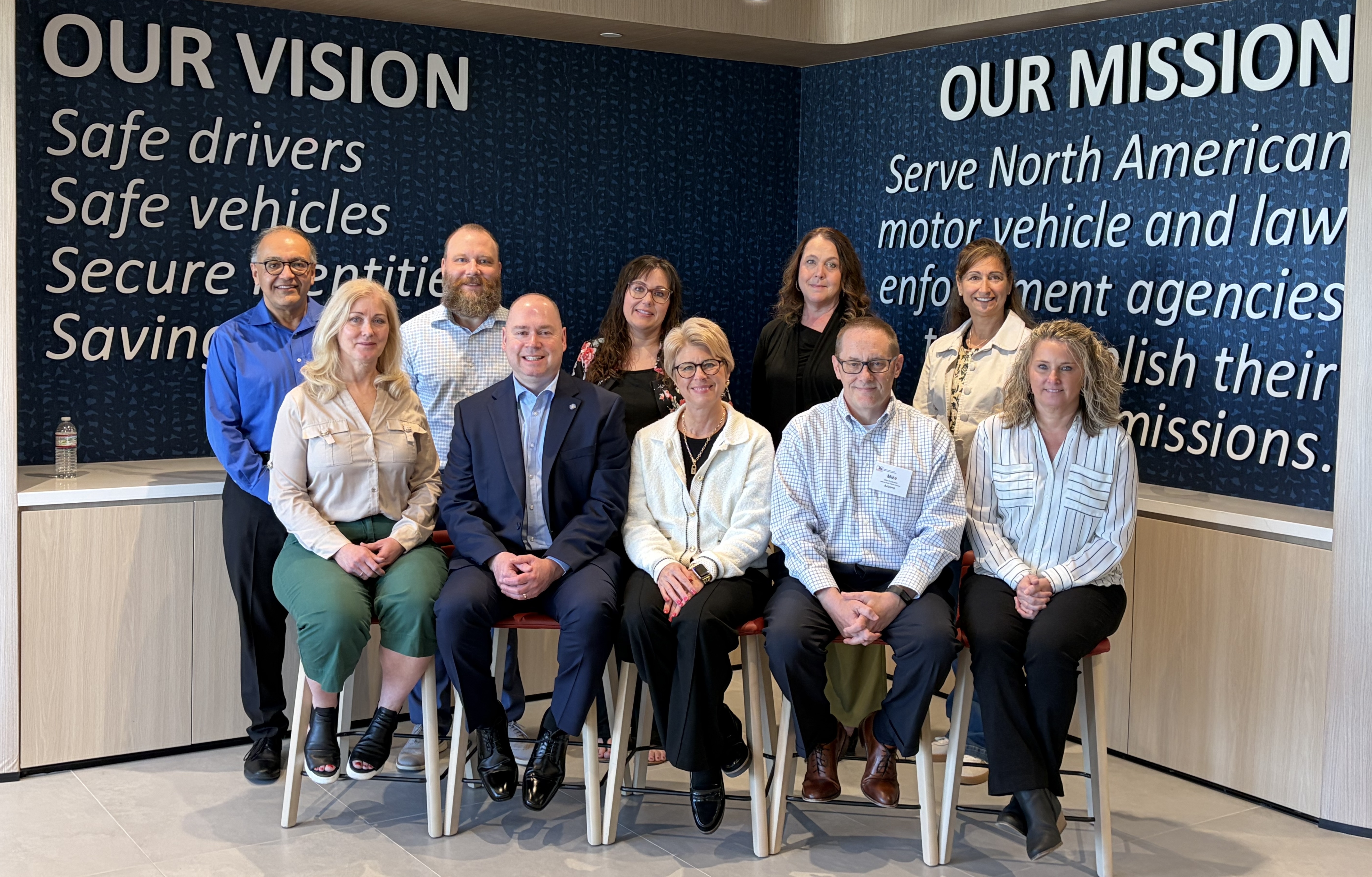 2026 MVA Operations and Customer Experience Committee
The MVA Operations and Customer Experience Committee, whose mission is to provide oversight and governance for the development of standards, best practices, and technical solutions to support effective MVA service delivery and operational performance, has organized its work around three core focus areas: Customer Experience, MVA Operations, and Hot Topics. The Customer Experience pillar addresses customer and employee satisfaction, data analytics, and decision-making, while the MVA Operations pillar drives operational excellence through strategy, financial planning, and system modernization and enhancements. The Hot Topics pillar allows the committee to respond to emerging challenges such as REAL ID, voter registration, CDL training provider enforcement, and emergency disruptions. A key committee-led initiative this past year has been a monthly Town Hall call series, held eight times between August 2025 and February 2026, which drew nearly 970 total attendees averaging 121 participants and 43 jurisdictions per call, covering topics ranging from MVA safety and security to employee engagement, internal ethics, the end of penny production, and appointment-based service delivery. Two working groups are actively producing new resources: the Employee Safety and Security Working Group is developing best practices for managing potential service disruptions across in-person and call center environments, with a publication target of September 2026, while the DMV Service Delivery Model Guidelines Working Group is creating comprehensive guidelines to help jurisdictions optimize service delivery across all channels for consistency, efficiency, and customer satisfaction, with a publication goal of September 2027. The committee is also supporting the upcoming AAMVA Systems Modernization Pop-Up Classroom event scheduled for April 28–29, 2026 in Nashville, Tennessee.
At their individual breakout, the Committee meeting opened with welcome remarks, housekeeping, and an overview of meeting objectives from committee leadership, followed by a review of committee service and the committee roadmap. Early agenda items also included policy discussion and votes alongside a government affairs update. A significant portion of the meeting focused on key initiatives, including an update on the AAMVA-Nlets implementation and jurisdiction feedback, a discussion on customer portal research, and a preview of the upcoming Systems Modernization Pop-Up Classroom event. A joint session with the Law Enforcement Committee centered on the draft Employee Safety and Security Best Practices document, covering its content, areas of shared interest and alignment between the two committees, and strategies for dissemination once published, followed by a final committee discussion and vote on the document. The agenda also included an update from the Customer Service Delivery Model Guidelines Working Group and small group report-outs across the committee's three focus areas — Customer Experience, Operations, and Hot Topics and Town Hall Calls — where members presented their deliverable commitments. The meeting rounded out with a FY27 budget request discussion, small group working sessions, and wrap-up remarks and next steps from committee leadership.
Vehicle Committee
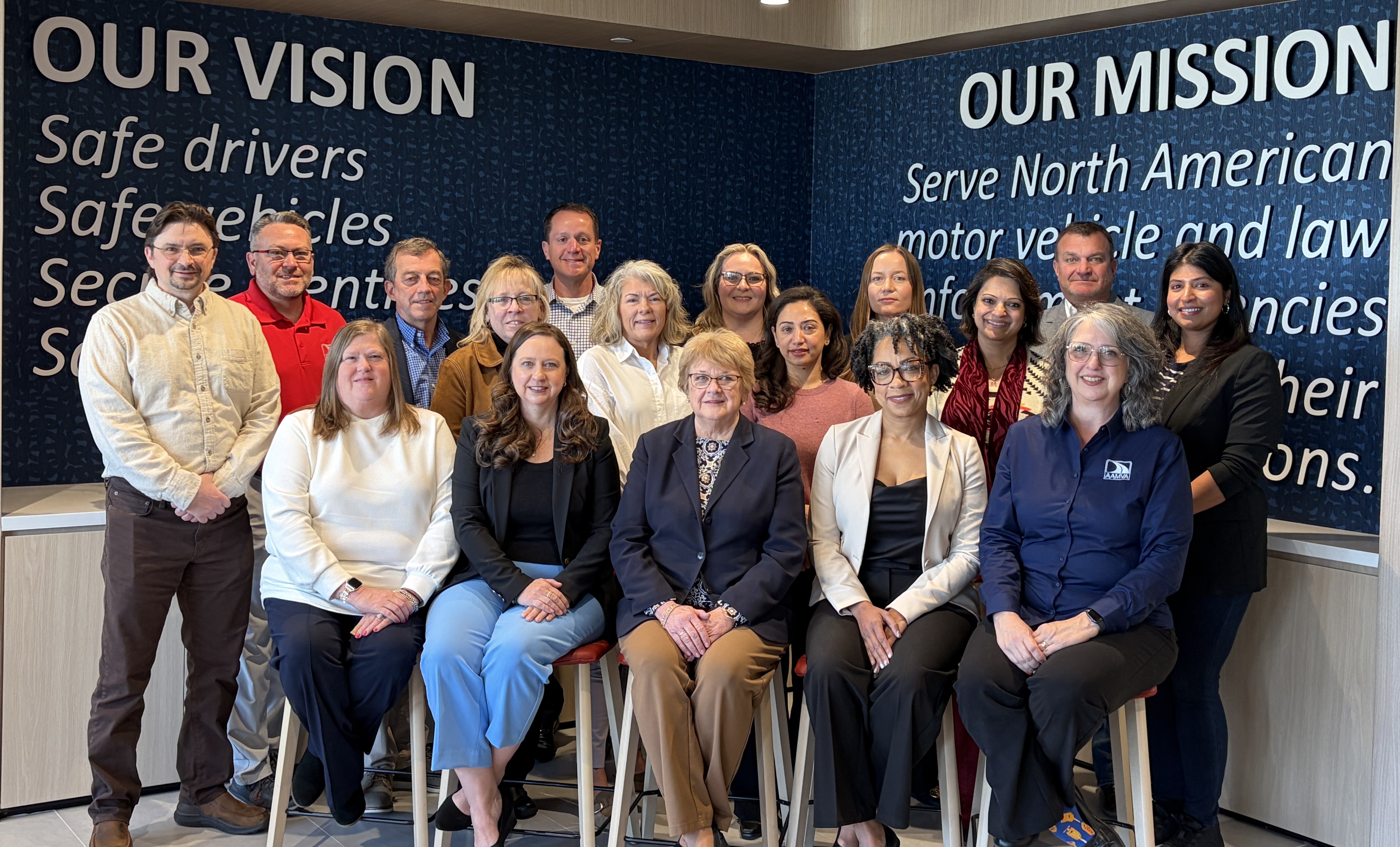 2026 Vehicle CommitteeThe Vehicle Committee, which oversees AAMVA's work on vehicle standards, technical solutions, and best practices with a focus on safety, fraud prevention, and consumer protection, has had an exceptionally active year marked by significant stakeholder engagement and the advancement of multiple initiatives. Two major convenings took place — the NMVTIS Workshop in Indianapolis in July 2025, and the NMVTIS Electronic Titling Forum in Savannah reflecting strong member engagement around titling modernization. The committee is also overseeing an in-depth analysis of the NMVTIS Consumer Access Program and directing the creation of a guide for interpreting NMVTIS data. On the working group front, the Imported Vehicles Working Group issued guidance in January 2026 on jurisdictional policy for titling and registering imported vehicles; the newly formed Multi-Stage Vehicle Working Group is developing best practices for licensing multi-stage vehicles, to be published this summer; and the Vehicle Titling, Registration, and Records Management Working Group — also launched in January 2026 — is working to promote consistency, accuracy, and DPPA compliance in vehicle records management across jurisdictions. The NMVTIS State Program Subcommittee is updating vehicle branding best practices and addressing duplicate VINs, while the Automated Vehicles Subcommittee is researching methods to identify AV and ADAS features and monitoring related legislation. The Electronic Titling Proof of Concept Group is making strong progress toward nationwide e-titling solutions, with toolkits now live, 28 jurisdictions having completed assessments, four pilot states testing private party vehicle sale use cases, and a white paper published establishing clear roles and responsibilities for all stakeholders in building a nationwide electronic titling ecosystem — with the path forward focused on scaling from development to full deployment.
During its breakout meeting, the Vehicle Committee agenda included introductions, opening remarks, and a division update, followed by a government affairs update. A significant early agenda item was the approval of three policy positions — a revision to the motor vehicle marketing and advertising policy and two new policies addressing VIN classification as non-PII and motor vehicle data availability for law enforcement. Updates were provided from all five subcommittees and working groups. Several NMVTIS-specific topics were addressed in depth, including VIN monitoring, batch and data syncs, optional state detail data, and a consumer access negative pricing option. Electronic titling received substantial attention, with discussion of current status, the working group charter, and the business plan. Additional topics included a white paper on tolling issues, an overview of the License Plate Verification Program, and JSI model legislation. The meeting also addressed committee rotation and a Region 2 vacancy before opening to a broader member roundtable. The meeting concluded with a summary of key discussions and outcomes led by committee leadership.